If you have been diagnosed with lymphedema, you probably have a lot of questions. What does treatment actually look like? Is it painful? How much will you have to do at home? The uncertainty can feel just as heavy as the swelling itself. The good news is that physical therapy for lymphedema is a well-established, effective approach, and once you know what to expect, the whole process becomes a lot less daunting.
At Salt + Light Wellness in Carson City, Dr. Nina Routon and Dr. Bailey Weston provide specialized lymphedema care tailored to each patient. Whether your swelling is related to cancer treatment, surgery, or another cause, here is an honest look at what the treatment journey involves from your very first appointment.
Your Initial Evaluation: The Foundation of Your Treatment Plan
Your first appointment is not a quick intake. It is a comprehensive, one-on-one evaluation designed to understand the full picture of your condition before any treatment begins.
Your therapist will review your complete medical history, including any cancer treatments, surgeries, or radiation you have undergone, because all of these influence how lymphedema develops and how it responds to care. From there, you will move through a physical assessment that covers the distribution and texture of your swelling, limb measurements, range of motion, strength, posture, and a skin assessment looking for dryness, early wounds, or any signs of infection risk.
Your daily life matters too. Your therapist will ask about your occupation, activity level, and lifestyle habits, because these factors shape how your personalized treatment plan is built. By the end of that first session, you will have a clear roadmap, typically including manual lymphatic drainage, compression therapy, therapeutic exercise, and education on self-management at home.
How Swelling Is Measured and Tracked
One of the most reassuring aspects of lymphedema physical therapy is that progress is measured objectively. You are not left guessing whether things are improving.
Your therapist will take circumferential measurements at standardized points along the affected limb and use that data to calculate limb volume over time. Alongside these numbers, they will assess tissue texture by feel, monitoring for changes in fibrosis (the hardening that can develop when swelling is chronic). These measurements are repeated regularly throughout your program, giving your therapist the information needed to adjust the plan as you improve.
Most patients find it genuinely motivating to watch the numbers change over the weeks.
What Lymphedema Sessions Actually Feel Like
Many people expect treatment to be uncomfortable, especially when their limbs are already sensitive and swollen. In reality, most patients are pleasantly surprised.
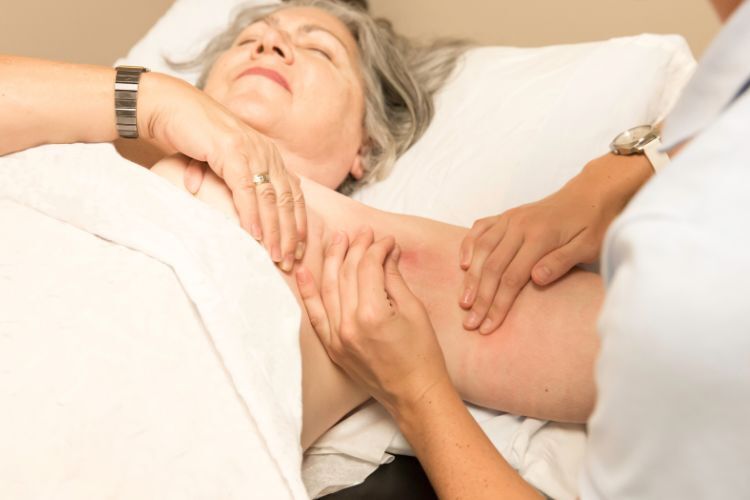
Manual lymphatic drainage uses very light, rhythmic pressure, nothing like deep tissue massage. Most patients describe it as relaxing, similar to a slow, gentle massage. During or after a session, you might notice warmth in the treated area, a sensation of fluid moving through the tissue, or more frequent trips to the bathroom as your body processes and eliminates the fluid. None of this is a cause for concern. These are signs the treatment is working.
Compression bandaging is typically applied after drainage to help maintain the reduction in swelling. It may feel snug at first, but it should never cause pain or numbness. If something feels off, your therapist wants to know immediately so they can adjust.
Compression Therapy and What You Will Wear
Compression is a central part of managing lymphedema, and your therapist will guide you through the right options for your specific situation. Compression therapy applies graduated pressure that keeps fluid from pooling in the affected area between sessions.
Depending on your condition, this might mean a compression sleeve for the arm, a garment for the leg, or multi-layer bandaging during the intensive phase of treatment. Fit matters enormously. A garment that is too loose will not do its job, and one that is too tight can create problems. Your therapist will measure you carefully and work with you to get it right.
The Home Care Component
Here is something that surprises many new patients: what you do between appointments matters just as much as what happens in the clinic. Your therapist will teach you self-management skills that become part of your daily routine.
This typically includes self-manual lymphatic drainage techniques you can perform on your own, specific exercises designed to stimulate lymph flow, instructions for wearing your compression garments correctly, skin care practices to reduce infection risk, guidance on when and how to elevate the limb, and clear signs to watch for that indicate your swelling is changing.
Patients who are consistent with home care between visits tend to see faster improvement and are far less likely to experience setbacks. Your therapist at Salt + Light Wellness will make sure you feel confident and capable before you ever leave the clinic.
How Long Does Treatment Take?
Lymphedema treatment is generally delivered in two phases. The intensive phase involves coming in frequently, often several times a week, to make significant reductions in swelling. The maintenance phase that follows focuses on sustaining those gains through home care, compression garments, and periodic check-ins with your therapist.
The length of the intensive phase depends on the severity of your swelling and how your body responds. Many patients see meaningful improvement within a few weeks. Your therapist will set clear benchmarks throughout so you always know where you stand.
Because Salt + Light Wellness offers hour-long, one-on-one sessions with a doctor of physical therapy, there is no rushing through your care or being passed off to a technician. The full session is dedicated to you and your progress. You can learn more about the full range of physical therapy treatments available at the practice.
Managing Lymphedema Alongside Other Conditions
Lymphedema does not always arrive on its own. Many patients in Carson City and the surrounding Northern Nevada area are also managing neuropathy, Parkinson's disease, post-surgical recovery, or the long-term effects of cancer treatment. The overlap between lymphedema and neuropathy in particular is something Dr. Routon sees and treats regularly.
Because Salt + Light Wellness treats the whole person and is not restricted by insurance visit limits or body-part rules, your therapist can address multiple concerns in a single session. If your swelling, nerve pain, and balance issues are all connected, your treatment plan can reflect that. You can explore the Parkinson's physical therapy and balance training services available if those are part of your picture too.
Taking the First Step
Living with lymphedema is manageable, and the right specialized care makes a significant difference. Physical therapy gives you both the hands-on treatment and the personal tools to take real control of your condition.
At Salt + Light Wellness in Carson City, Dr. Nina Routon and Dr. Bailey Weston are ready to guide you from that first evaluation all the way through building a long-term management routine that fits your life. If you are ready to get started, book your evaluation today. Reducing swelling, improving comfort, and getting back to doing what you love is possible, and it starts with one appointment.

.jpg)